What’s your background?
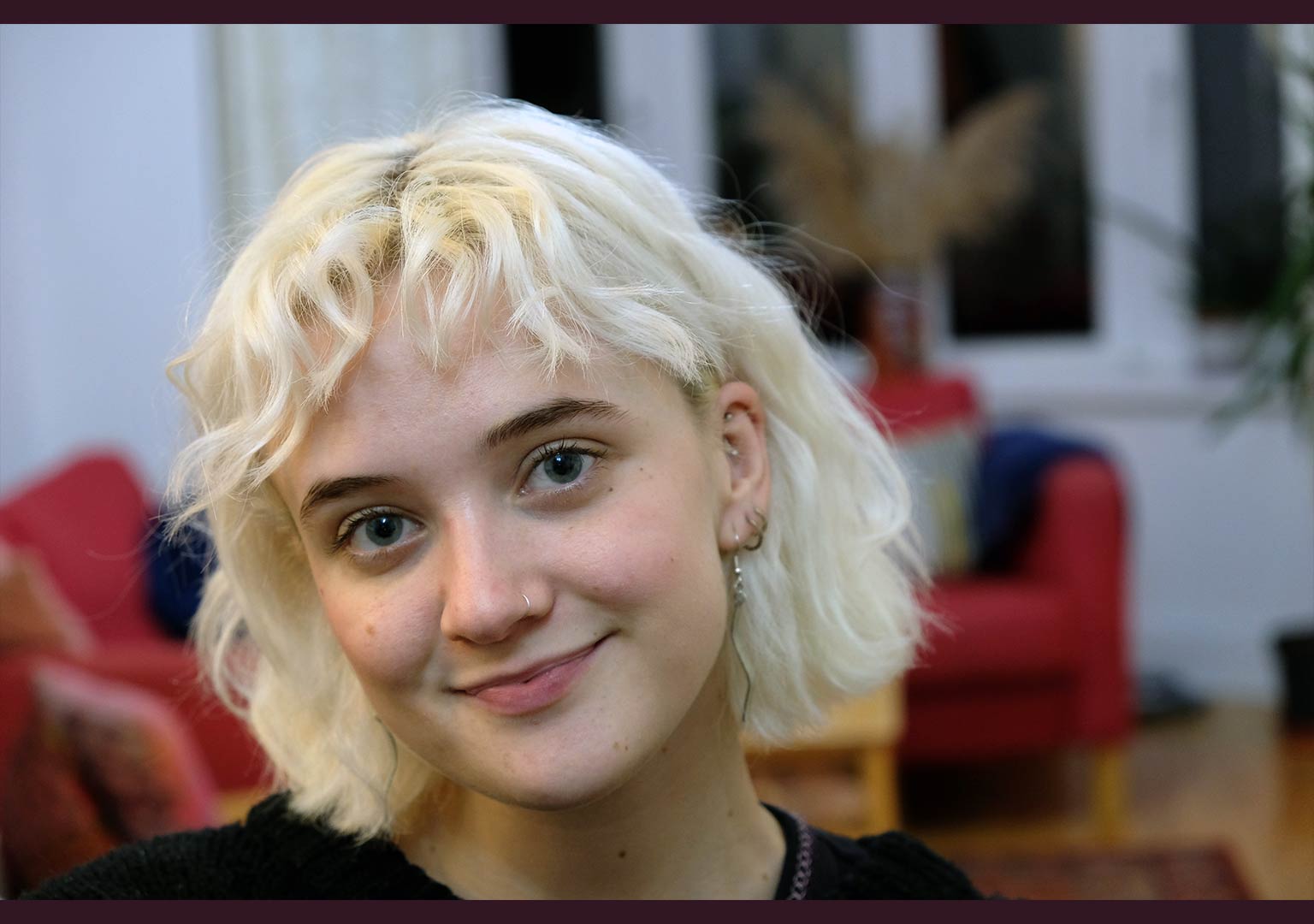
I’m a multi-disciplinary creative with a people-centred approach. I studied International Development in Norwich at the University of East Anglia where I was
first introduced to community participatory work. Following this I moved to Manchester in 2021 to do a master’s in Visual Anthropology which combined both my sociopolitical interests and my desire to be creative. During my postgraduate degree I trained in filmmaking and participatory methods which has led me to pursue a career in community arts. I love facilitating creative workshops, making art collaboratively and learning from each other.
Who are your biggest influences? Artistically? Who inspired you to become an artist?
From a very young age I have been completely fascinated with art and its seemingly endless possibilities. I remember reading the book, ‘Katie’s Picture Show’ as a child, about a girl’s first visit to the gallery with her Grandma. The art comes alive as she climbs into the paintings, learning how interesting and exciting art can be. I latched onto this story, and it obviously helped that I shared my name with the girl from the book.
Similarly, my own Granny introduced me to art as a child, as she was extremely
creative herself. She was one of the first people to inspire me to explore my artistic
potential.
How have you developed your career? (From student to artist)
During my master’s I applied for my first freelance commission with the Pankhurst Trust and Manchester Histories. I worked alongside three other young artists and the experience gave me the confidence to pursue other freelance opportunities. I think I have really benefited from continuing to put myself out there even when my confidence is maybe lacking.
How does your work comment on current social or political issues? And if it does why is that important to you? Or if your work doesn’t comment on the current social or political issues what does it focus on instead?
I aim for the projects I work on to be participant-led, working to re-balance unequal power structures that can be present in researcher-participant relationships. The socio-political messages that arise from my work range from subtle to overt. For example, my postgraduate film project in Belfast dealt with difficult, personal experiences connected to the sectarian conflict from the 1960s to the 1990s. Another film of mine, ‘Is the fight over?’ assessed the state of gender equality through the eyes of the public in Manchester. However, the short films ‘Your Home, Your Voice, Your Place’ have a more muted political tone, instead highlighting the joy, companionship and care found in working-class communities in Oldham.
What jobs have you done other than being an artist?
I’ve had a few different jobs, my most random being a rollercoaster operator at Legoland!
What role does arts funding have to your practice? Could you and would you still be an artist if you weren’t paid to explore your art?
Personally, I will always try to continue my artistic practice in unpaid time, and I am constantly trying to evolve my creative methods when I can. Alongside my freelance work, I still work part-time in a café to pay the bills. However, not only does arts funding allow me to make a living from doing what I love, but it also validates my work and my perception of myself as ‘an artist’.
Then answer these Quick Fire questions…
| Collaborate or work alone? | Collaborate always |
| Plan ahead or improvise? | Plan ahead then improvise on the day! |
| Inside or Outside? | Outside |
| Laugh or Cry? | Laugh |
| Morning or Evening? | Evening |
| Football or Rugby or Cricket? | Women’s football! |
| Ed Sheeran or Liam Gallagher? | Liam Gallagher |