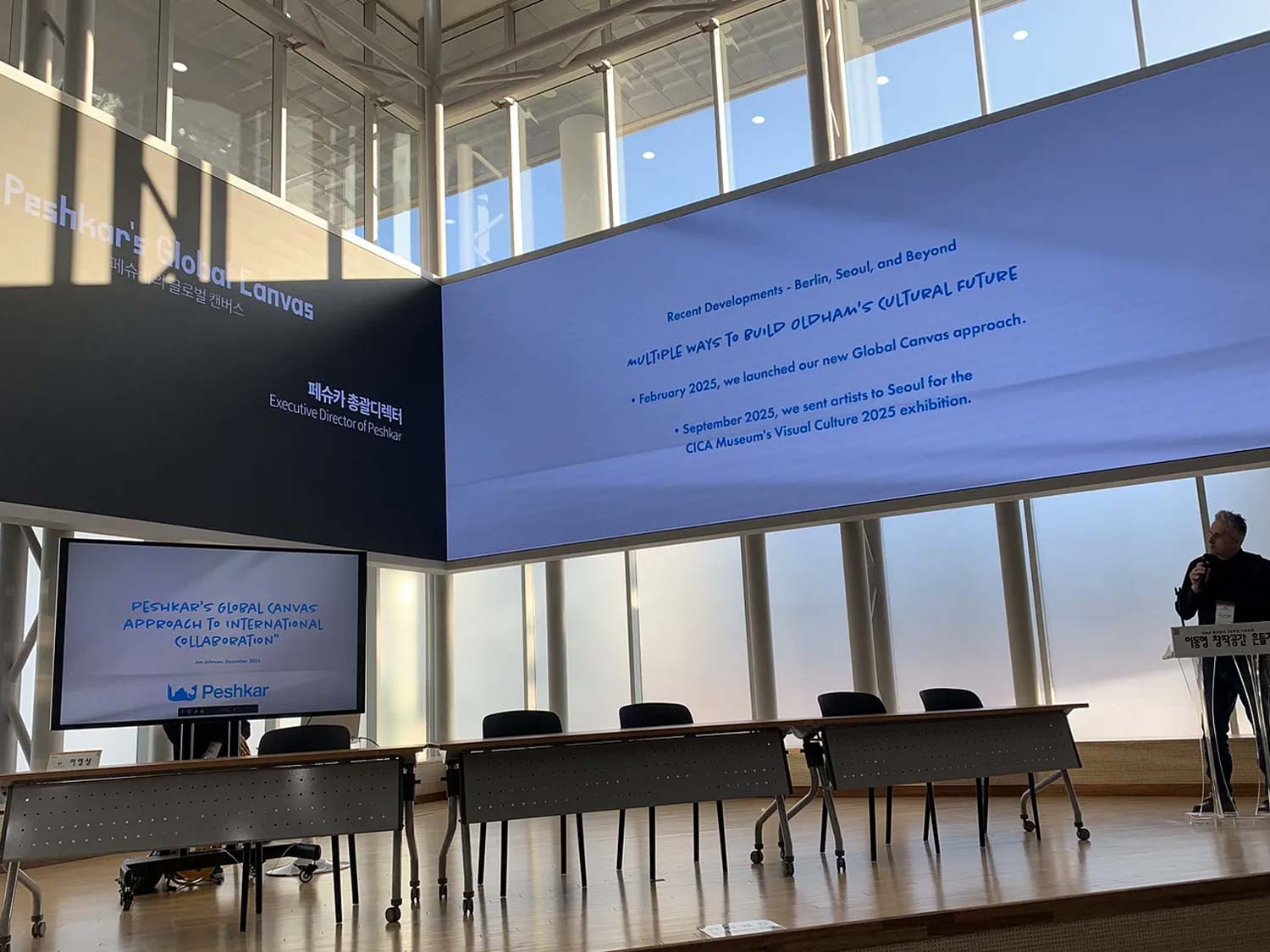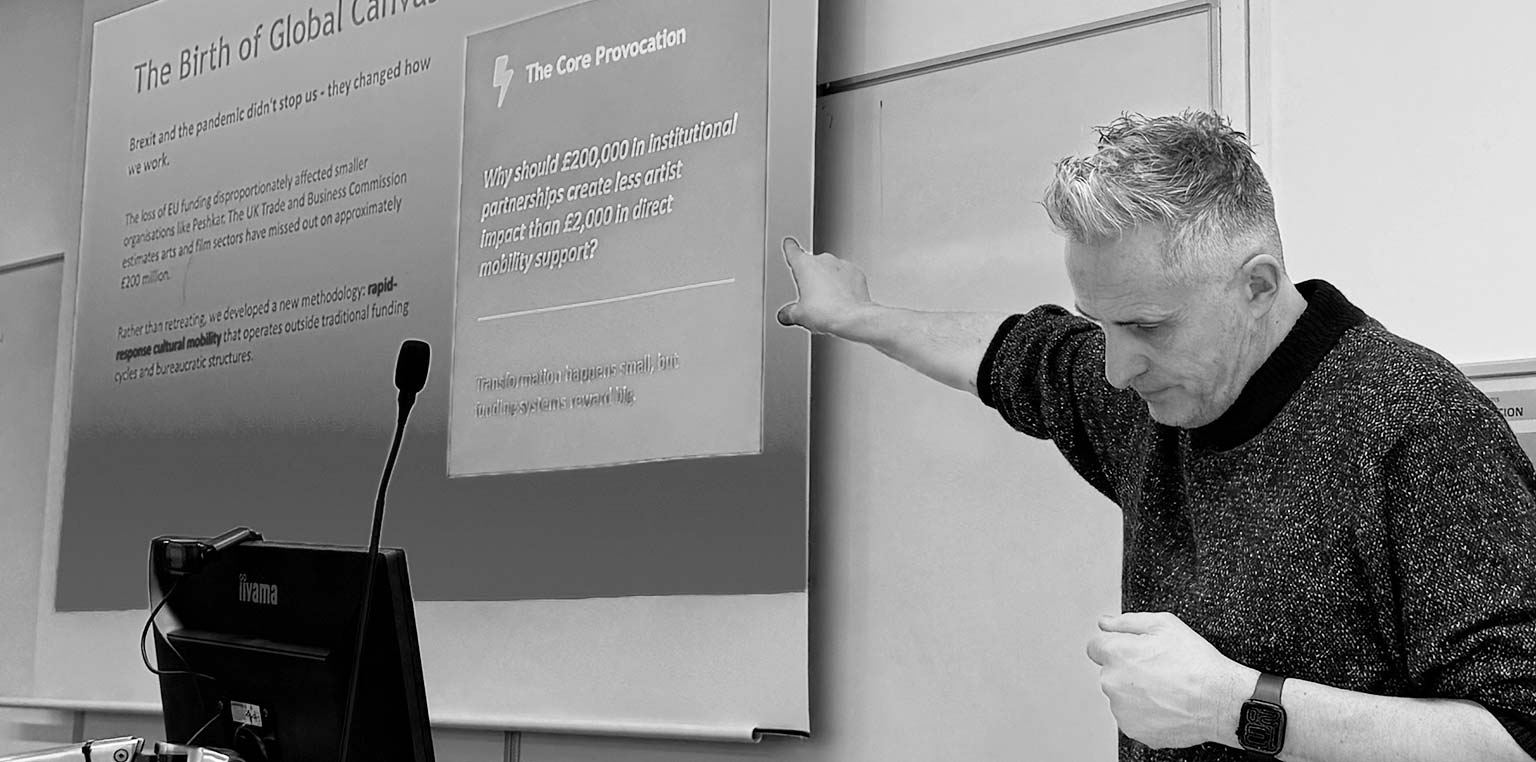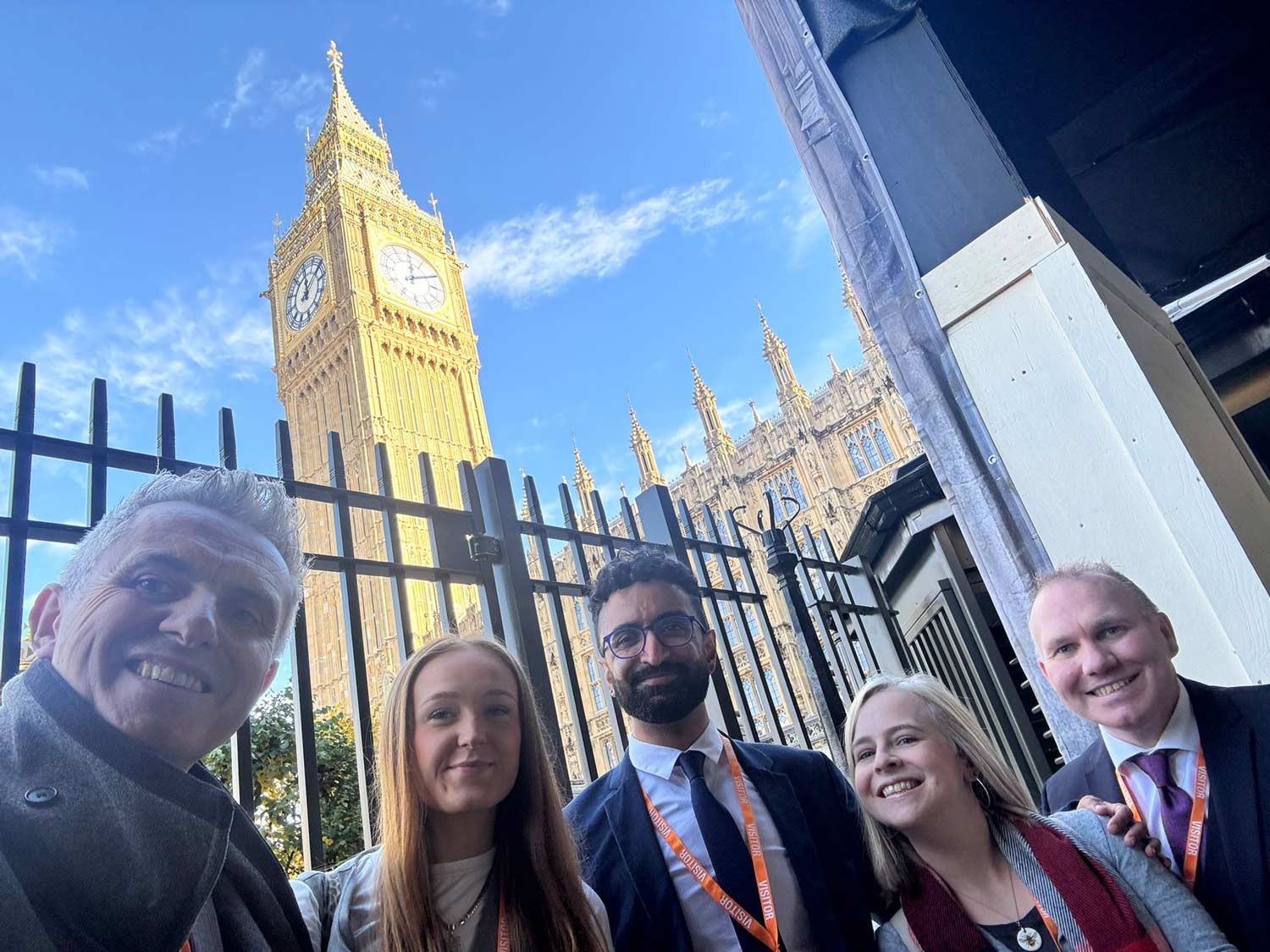
At the end of October, we presented Peshkar’s international work at the Houses of Parliament, hosted by Baroness Theresa Griffin - whom we first met in 2014 when she was an MEP in Brussels. The event, organised by our Development Director David Holden-Locke, marked the launch of our new publication and brought together stakeholders to discuss youth arts collaboration.
We launched Global Canvas: Peshkar’s International Journey (2010-2025), our publication documenting fifteen years of cross-cultural work that has reached over one million people across Europe. Alongside the publication, we presented our policy note to DCMS outlining proposals for restoring international youth arts mobility post-Brexit.
Contributors and Perspectives
I presented the publication with our Programmes Director Steph Meskell-Brocken, who discussed mentoring artists through intensive creative projects and the need for structured professional support. Bhavesh Jadva, now a Peshkar trustee and TV development producer working in comedy entertainment, shared his progression from Peshkar participant to international project worker to his current role in film and television.
Madison Hawley described her recent Berlin Artist Excursion, explaining how it developed her creative identity, confidence, and professional network. Her account provided examples of how international opportunities benefit emerging artists - evidence that supports our policy recommendations.
Policy Context and Evidence
Professor Dave O’Brien from Manchester University provided academic context, connecting our work to cultural policy and inequality. Senior representatives attended from the National Lottery, British Council, and Arts Council England, including Anne Applebaum, Director of Young People.
Our policy note to DCMS presents evidence from nine Erasmus+ and Creative Europe projects between 2010-2025, including FutureDesh (climate change and digital storytelling with Bangladesh), Under 25 Routes (UK-Spain-Portugal exchange), and InterMEDS (reframing migration narratives). The data shows that participants in our programmes experienced a 40% reduction in NEET risk, with 63% moving into education, training or work within a year.
The Creative Connect Proposal
We focused on our proposal for a ‘Creative Connect’ programme - a UK-led successor to Erasmus+ focused on arts, culture and digital creativity. This would be delivered through partnership between DCMS, British Council, Arts Council England, and experienced organisations like Peshkar.
The economic case: youth inactivity costs £56,300 per NEET in public finance costs, while cultural programmes like ours yield social returns of £3-5 per £1 invested. In Greater Manchester, where youth unemployment runs 30% above the national average, such programmes could directly support the Local Skills Improvement Plan.
Recommendations
Our policy note outlines four recommendations: establishing Creative Connect as a UK youth arts mobility programme; creating a Cross-Agency Youth Mobility Compact; embedding cultural participation in skills and employment strategy; and reallocating a portion of late-intervention spending (currently £9.9bn annually) towards cultural early intervention.
Baroness Griffin concluded by noting that culture should be recognised as a pathway to employment and development. As we state in our policy note: “If we want Global Britain to mean something in Oldham, Bolton or Sunderland, we must give young people the same chance to travel, create, and collaborate that their European peers enjoy.”
With our policy proposals now with DCMS, we continue working with partners to restore these opportunities for young people. Global Canvas is available as a downloadable PDF here.